
Sunday, September 20, 2026
Chapter Meeting Program: Native Plants that grow by Rivers, Streams and Lakes
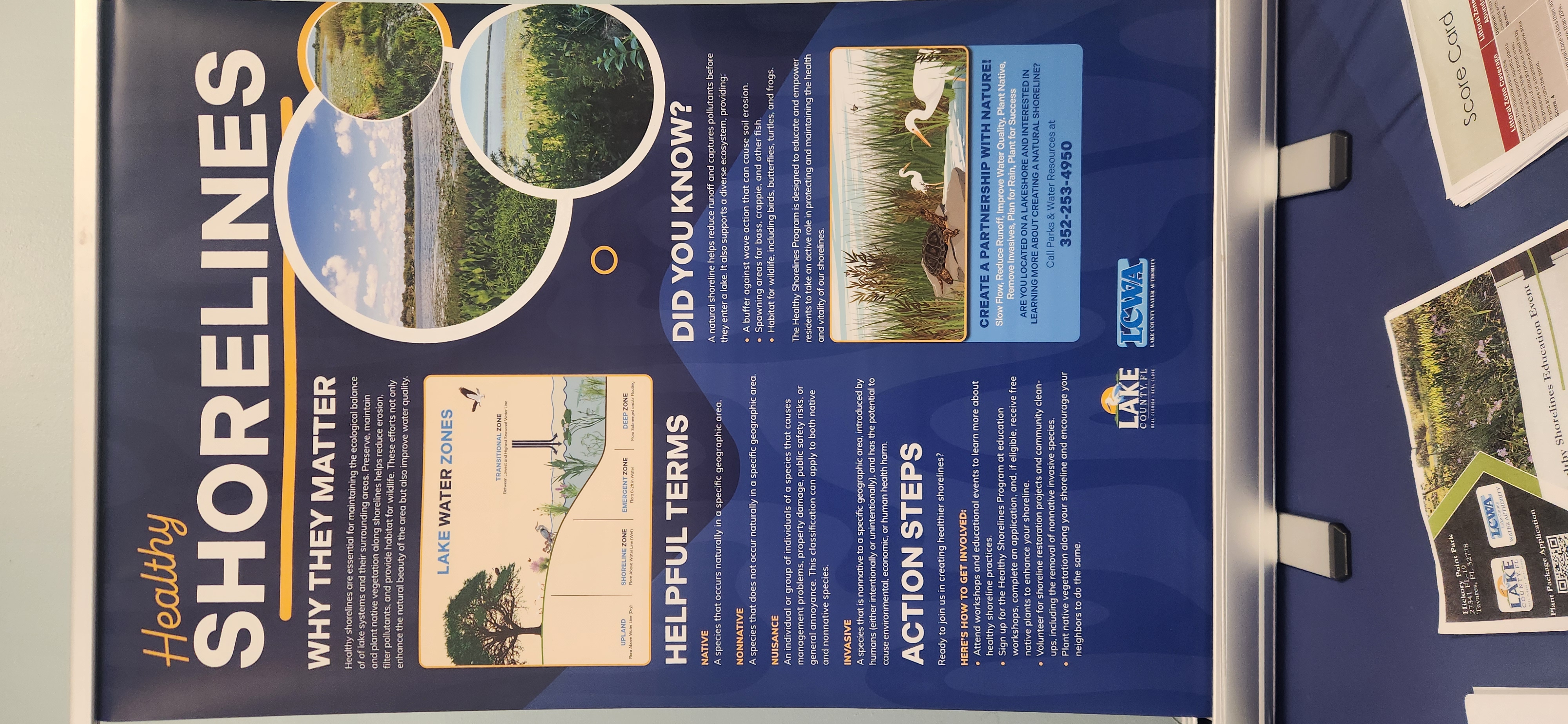
Lake County Parks and Water Resources team members will introduce the different types of plants and their adaptations to wetland ecosystems. They will also explain their special Healthy Shorelines Program offer for residents who are located on waterways. If you do not live on any type of wetland, you’ll certainly enjoy learning more about Lake County’s wetland environments. If you know someone who might benefit from this program, invite them to attend with you. Free and open to the public. Speakers: Luke Vallentine, Program Manager, and William Blanco, Park Ranger.
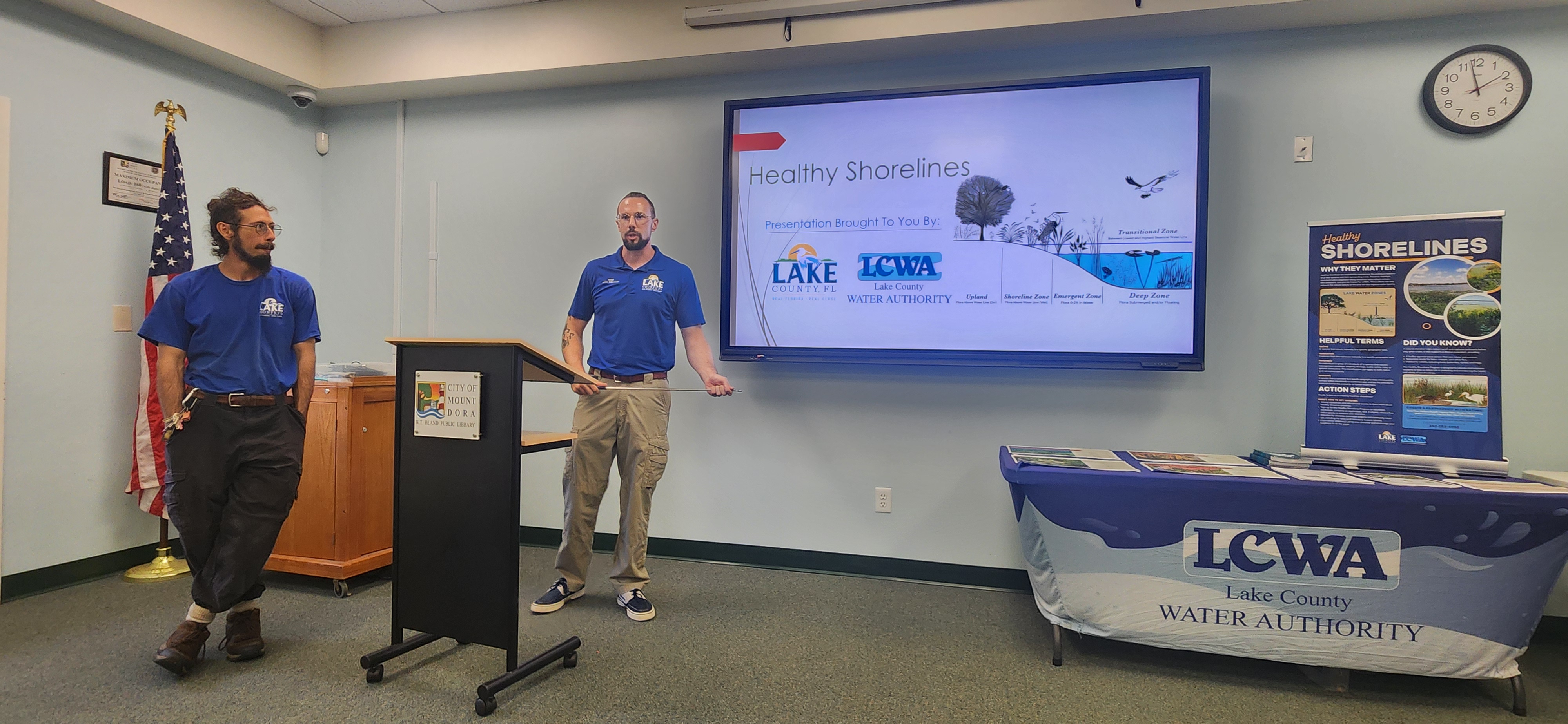 Speaker: Luke Vallentine, Program Manager (right)
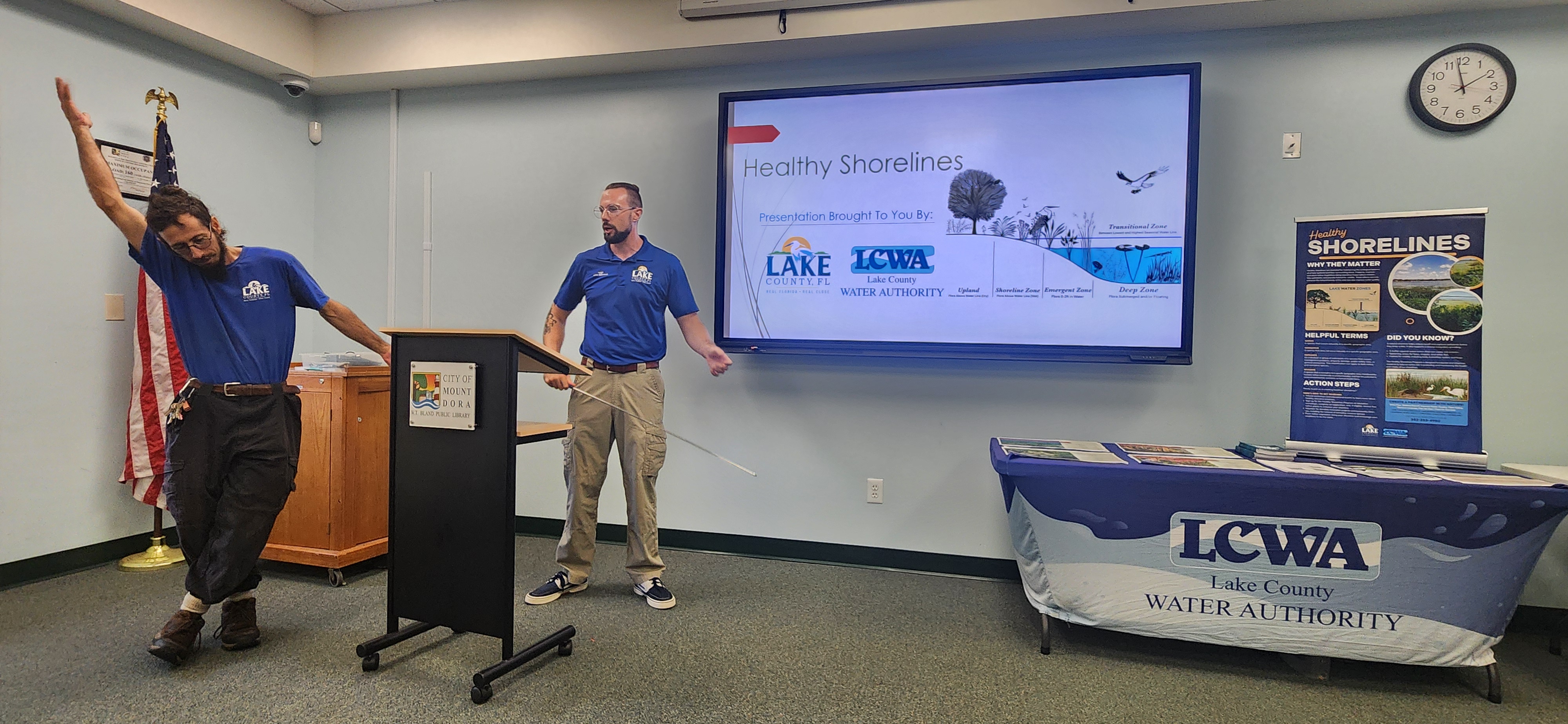 Speaker: William Blanco, Park Ranger (left).
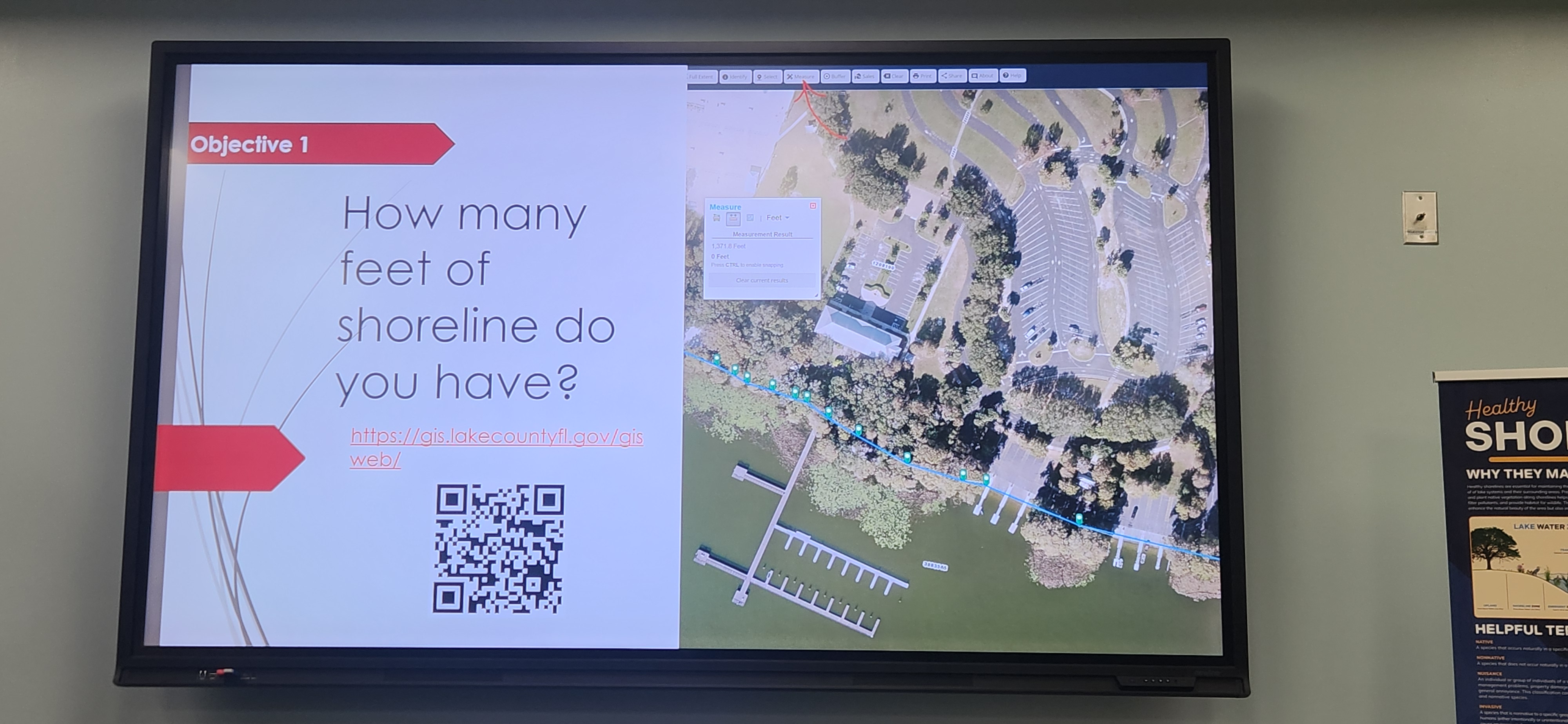 Important Weblink
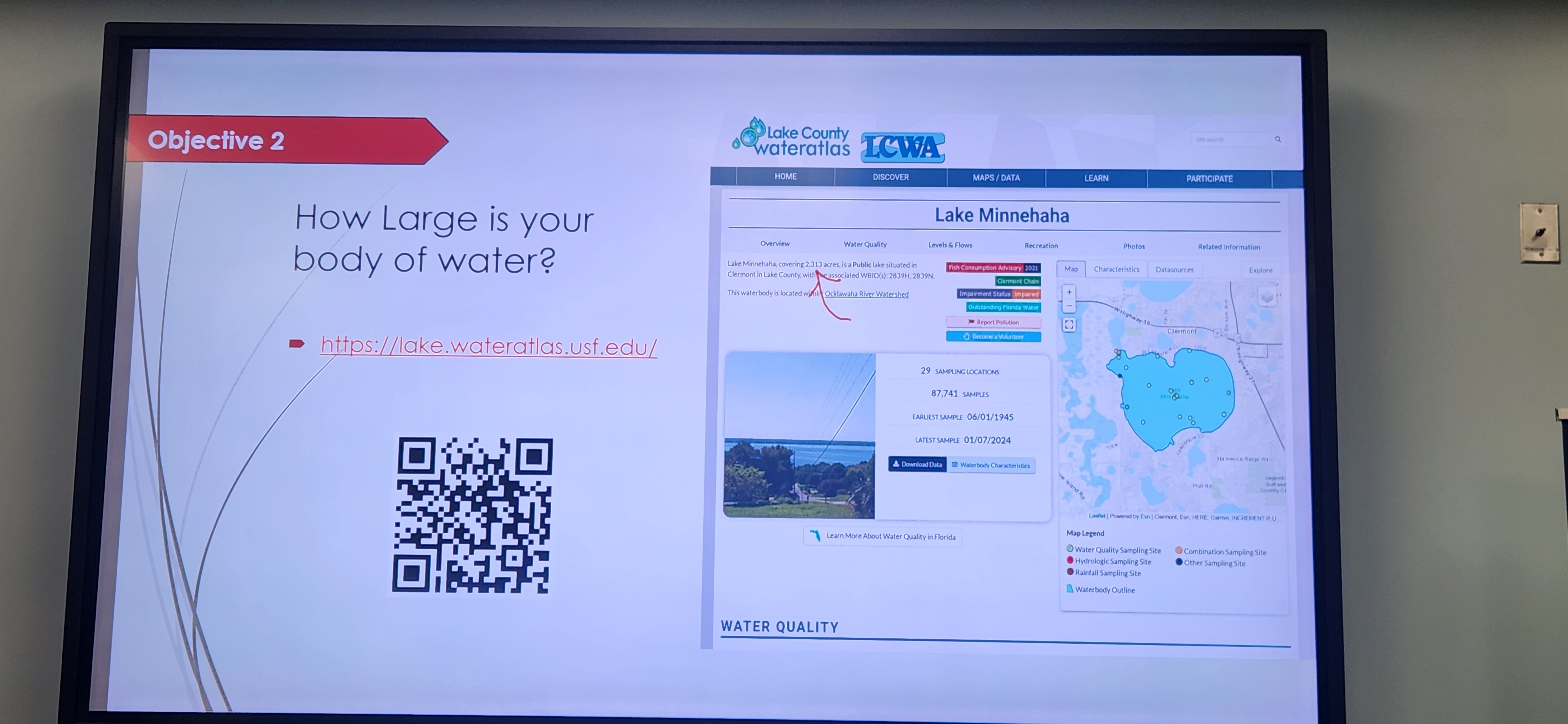 Important Weblink
Sunday, September 20, 2026
Chapter Meeting: Things to Report
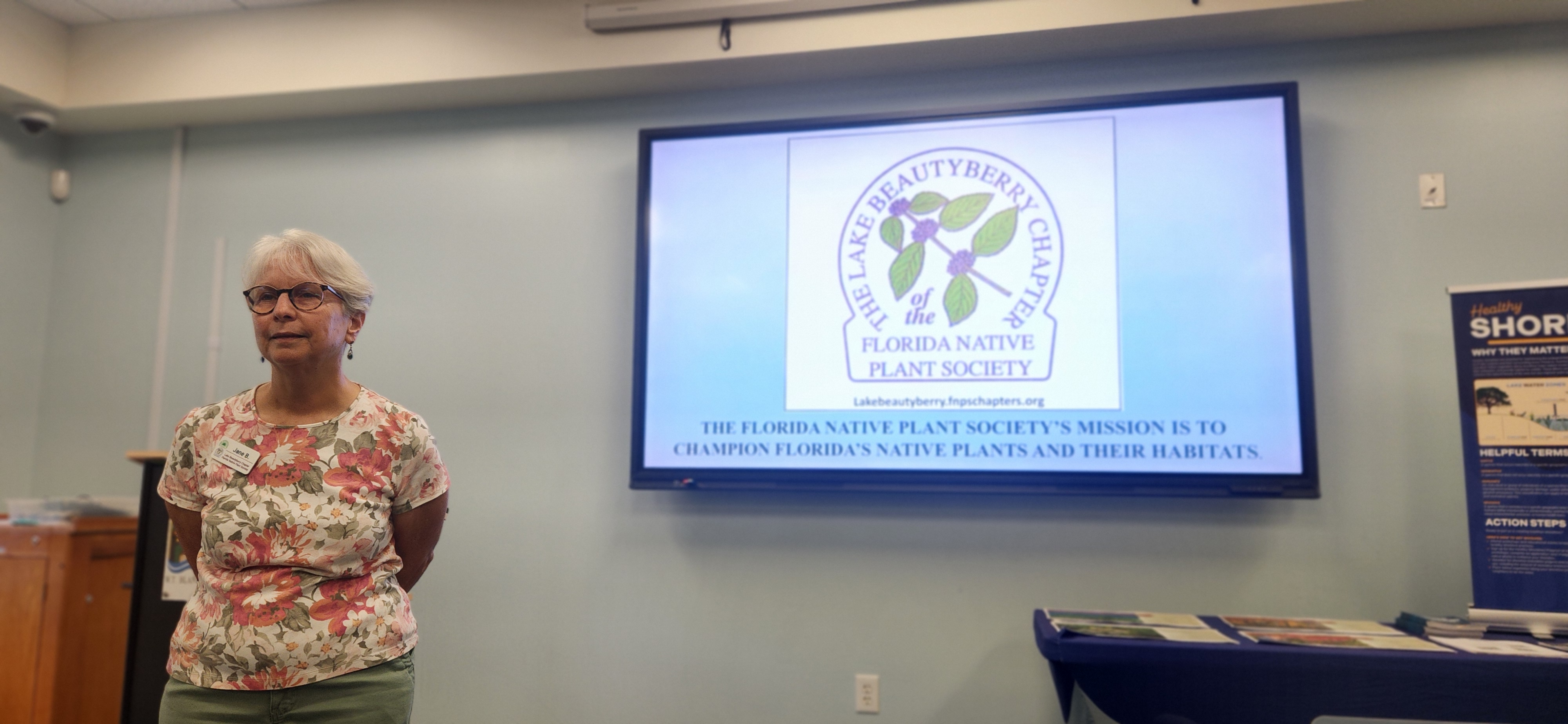 Ms. Jane Bullock (President) begins the meeting, introducing Upcoming Events.
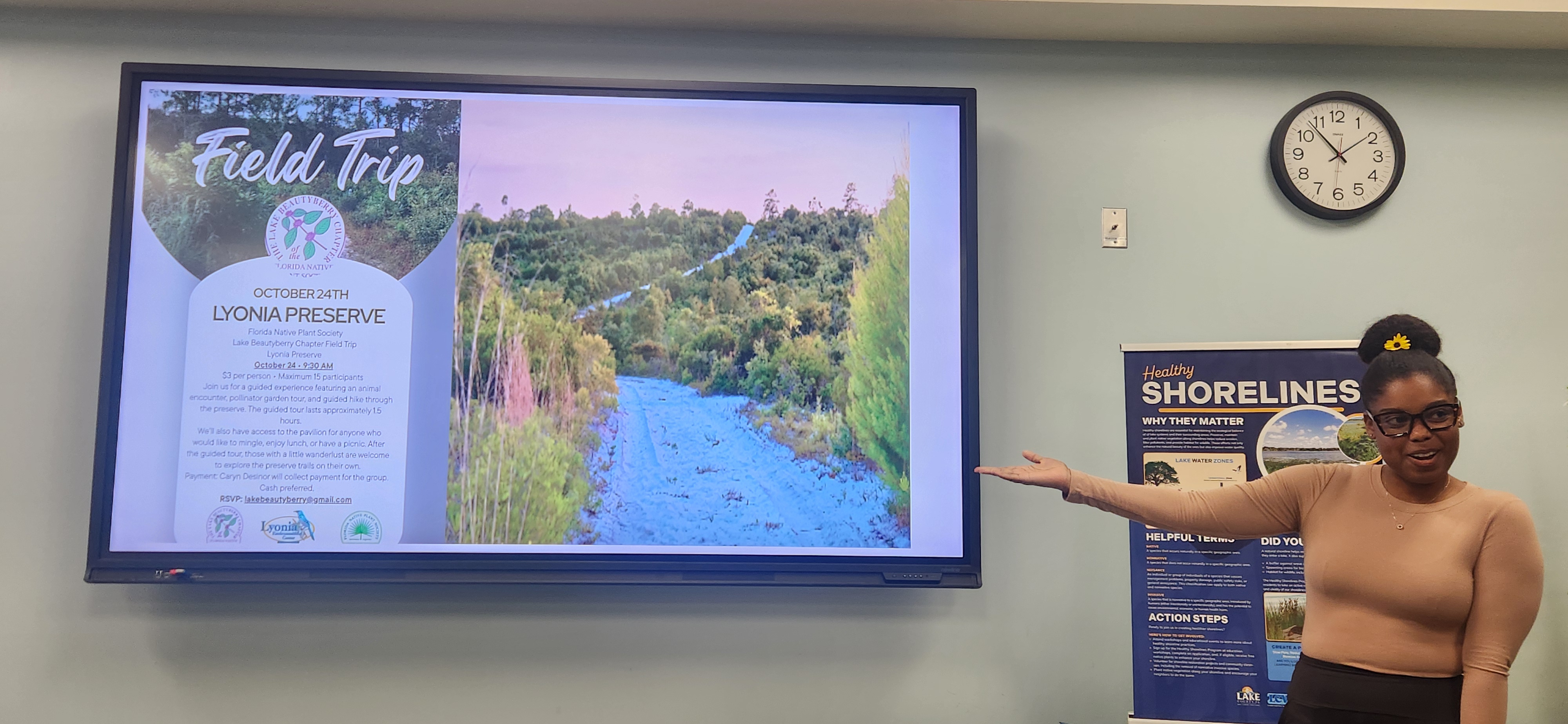 Ms. Caryn Desinor (Field Trip Coordinator) describes the Upcoming Trip to Lyonia Preserve.
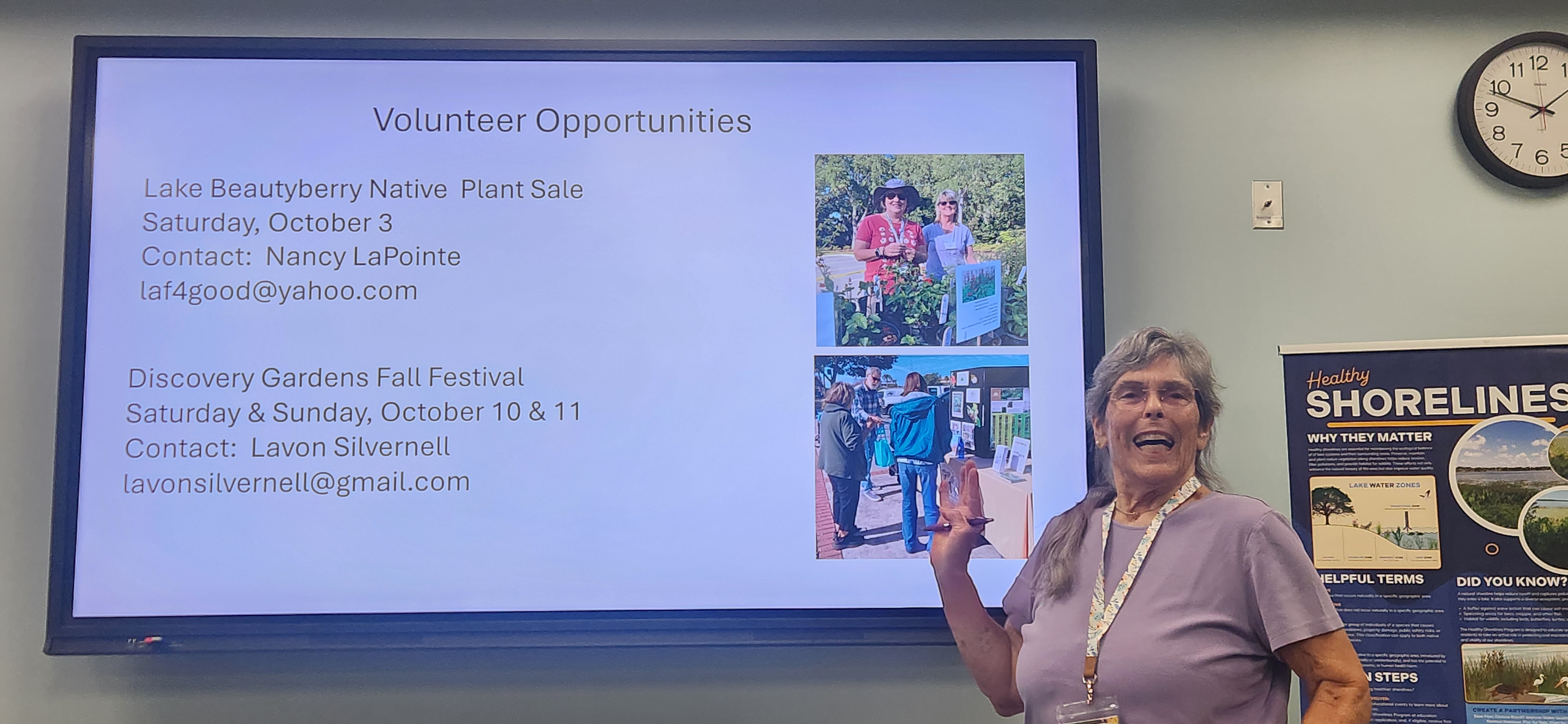 Ms. Nancy LaPointe (Plant Sale Coordinator) describes the Upcoming Fall Native Plant Sale.
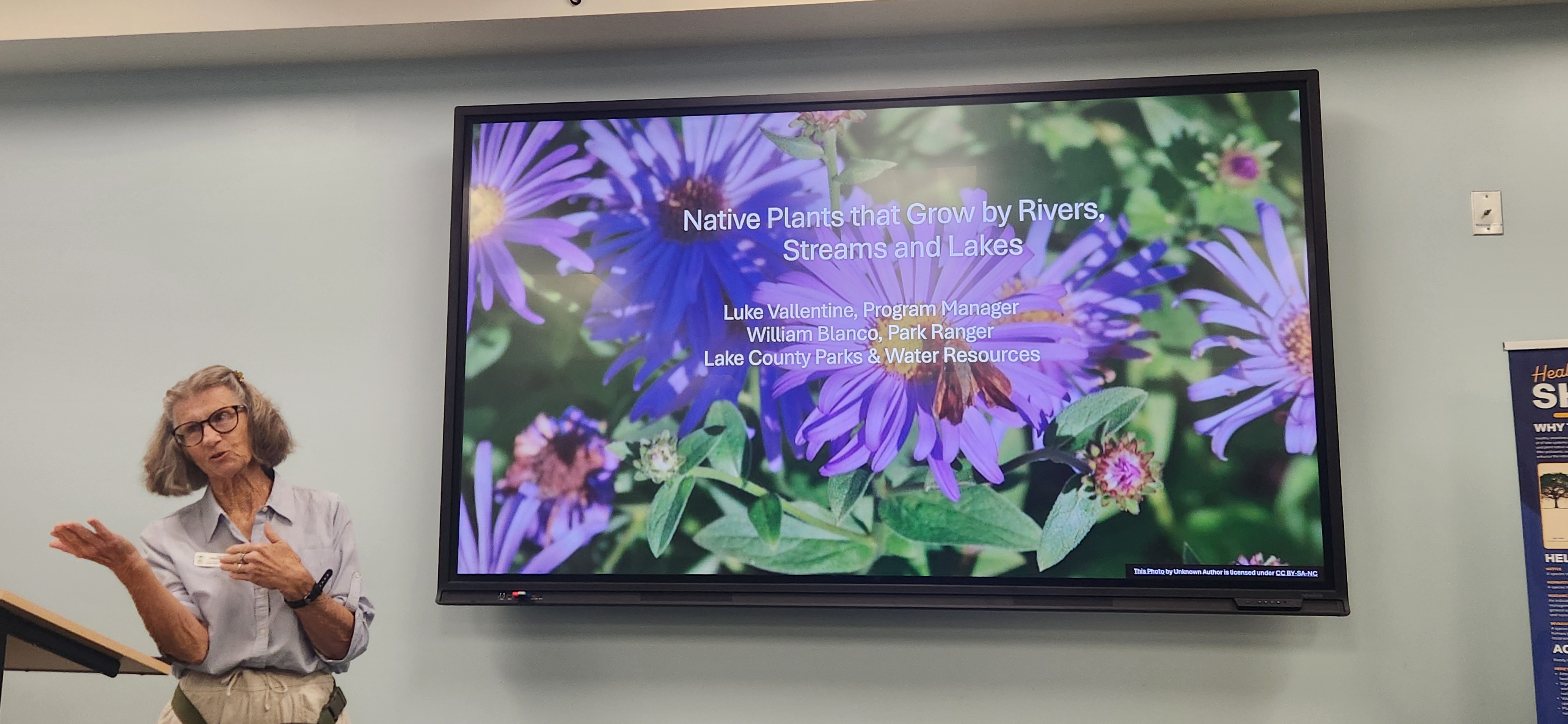 Ms. Neta Villalobos-Bell (Vice President) introduces program speakers.
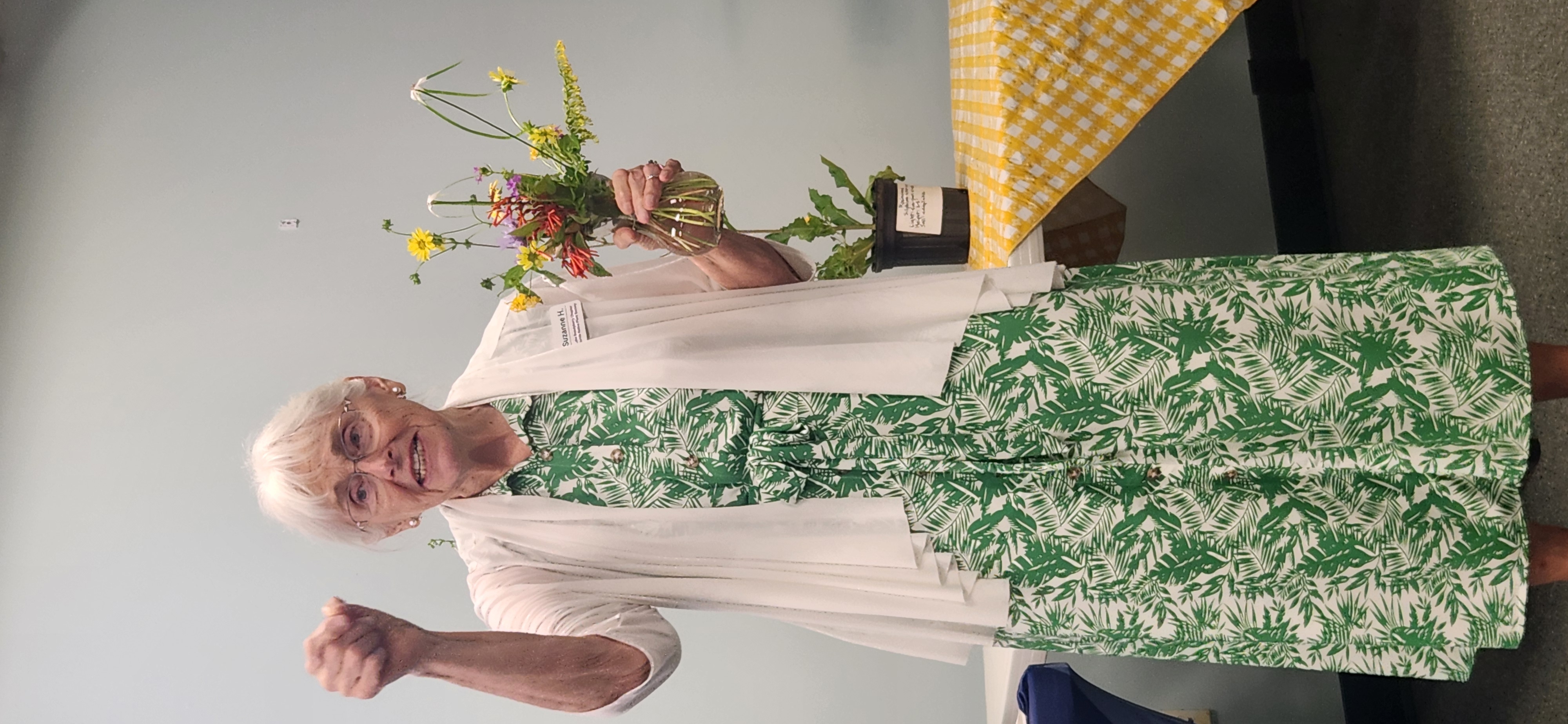 Ms. Suzanne Hill (Secretary) relates a few very interesting natives growing in her yard.
Sunday, September 20, 2026
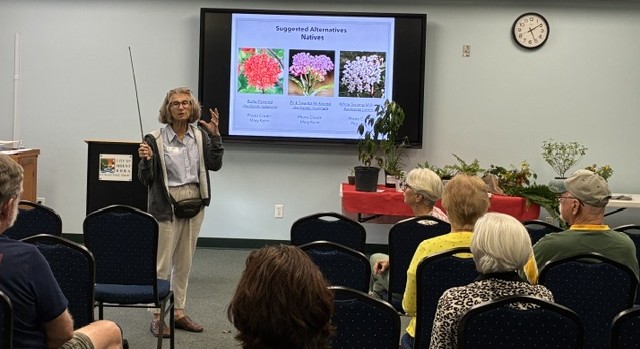
Presentation: Plant This, Not That!
SPEAKER: Neta Villalobos-Bell
Several Nuisance and invasive plants are sold at garden centers. Learn to recognize these nuisance species and make a plan to replace them in your yard. Learn which native plants make good alternatives and why.
Sunday, July 19, 2026
Presentation: The Role of Opuntia and the Revolutionary War
Reprinted text from UF/IFAS Lake County BLOG with permission from LBB Suzanne Hill
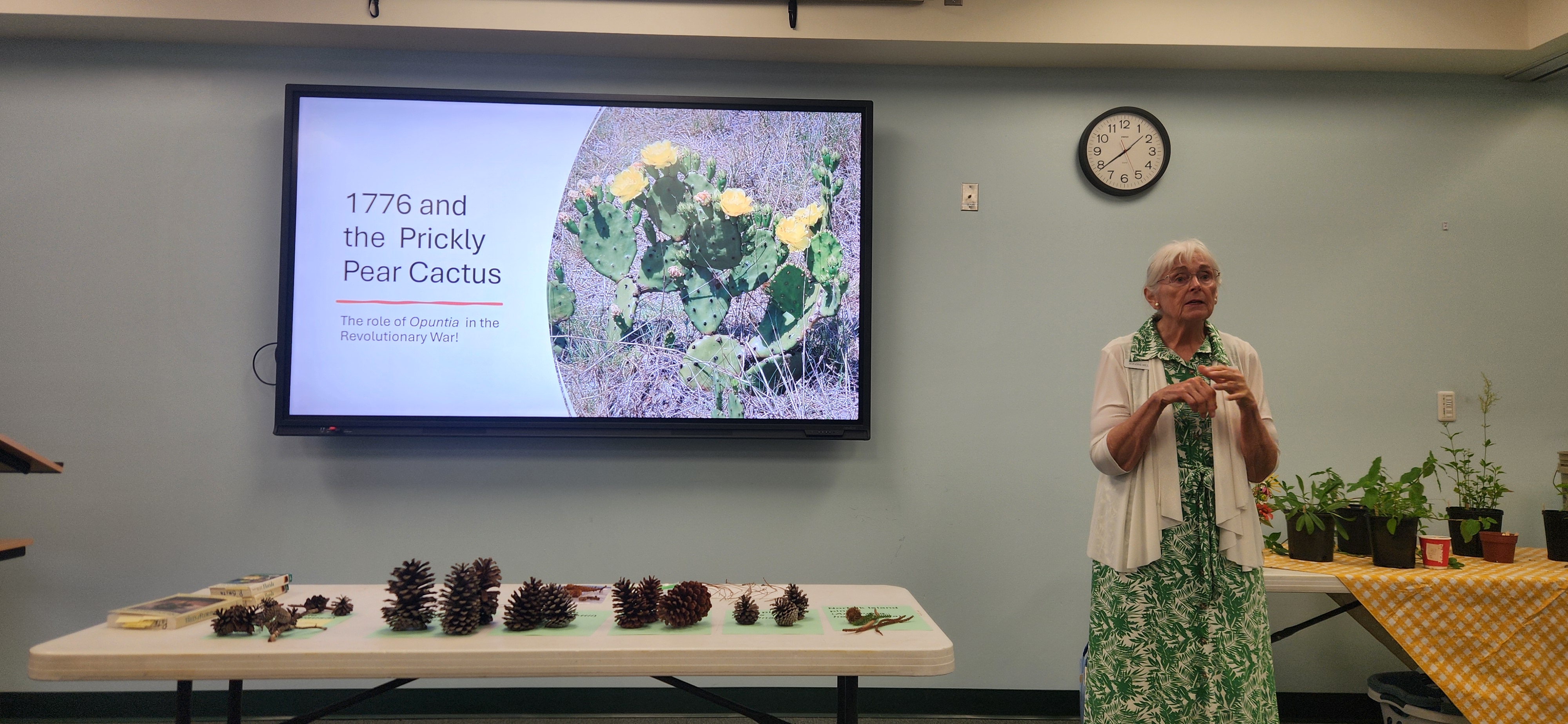
“The Redcoats are coming, the redcoats are coming!” This famous historical warning from the American Revolutionary War refers to the approach of the British Army. In addition, British officers were distinctly dressed in red wool coats. How are red coats associated with the Prickly Pear Cactus?
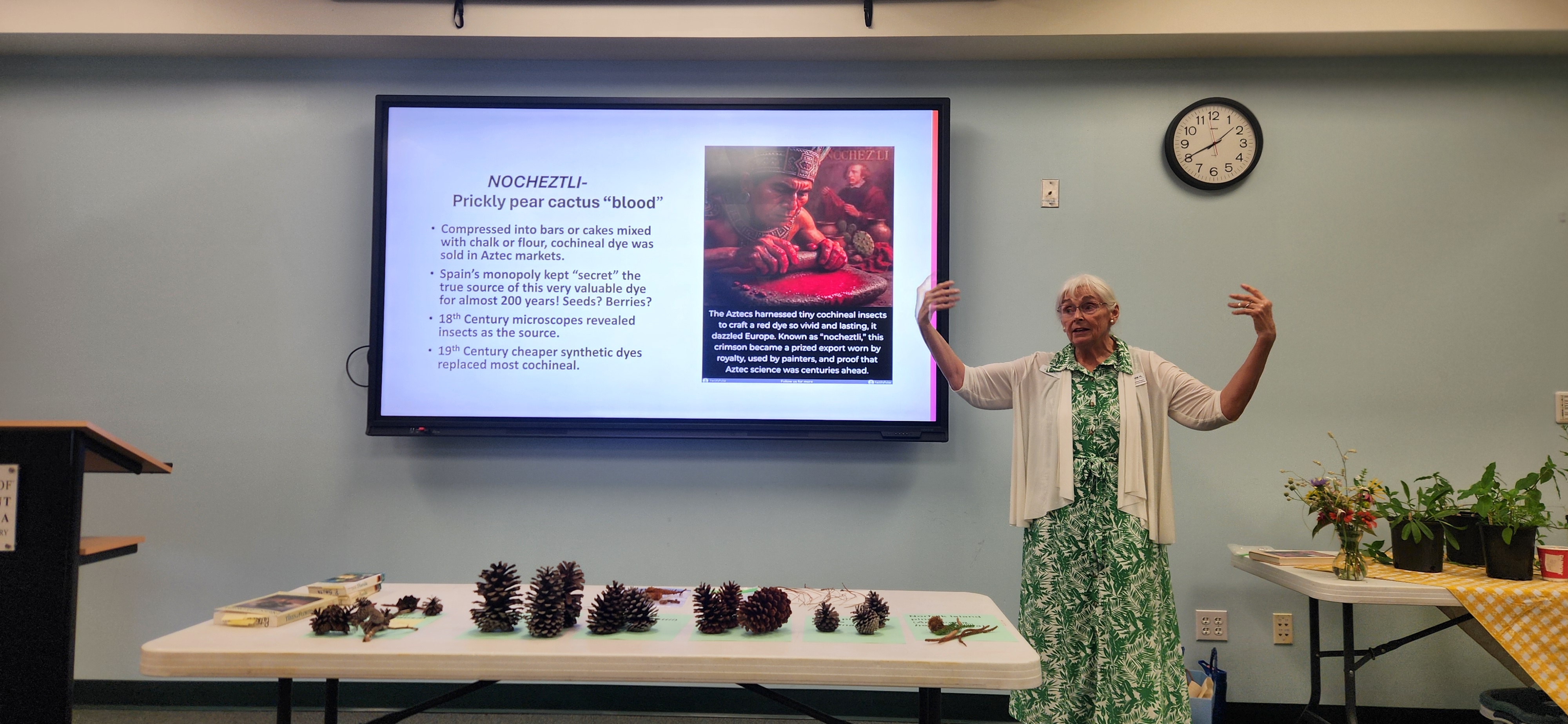
Indigenous People Influence
In the early 1500s, Spanish explorers discovered vibrant red dyes used by Mesoamerican indigenous people, Aztecs and Mayans. Red dyes were a challenging color to assimilate prior to this discovery. However, Spain imported this red dye source but kept it a secret for 200 years!
Ancient MesoAmericans harvesting Cochineal scale insects. (image generative ai)
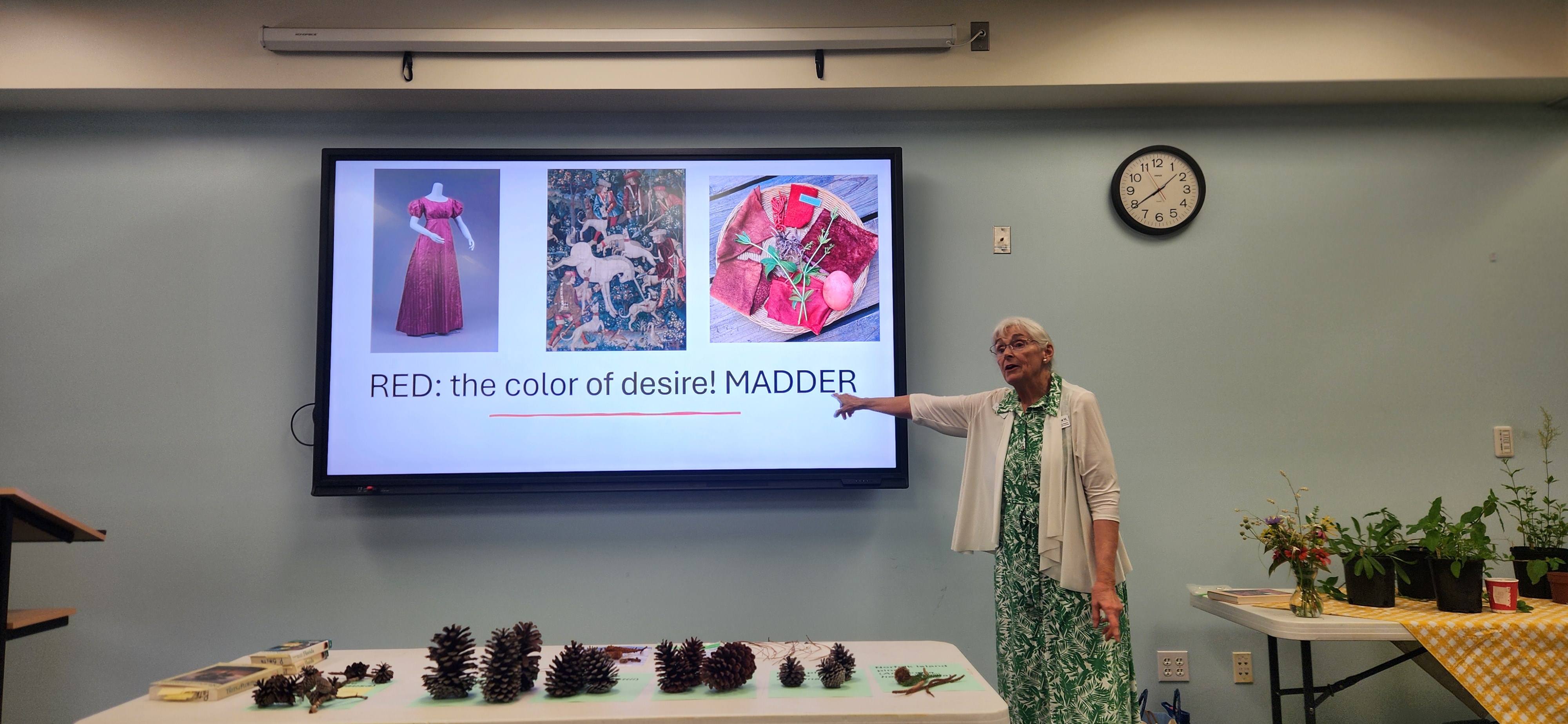
Red Dye Story
Prickly Pear Cactus (Opuntia cochenillifera) has an insect scale pest called Cochineal (Dactylopius coccus). Wingless females produce a white, waxy substance for sun protection and carminic acid against predators. Carminic Acid is also a very powerful red dye! Harvesters would scrape off the cochineal insects, dry them in the sun, mix them with flour, and sell them in cake form. This scarlet dye, called Nocheztli, produced vibrant red clothing, and it was colorfast (not quickly fading). Nocheztli literally means cactus blood. However, it requires 70,000 cochineal bugs to produce just one pound of the brilliant dye.
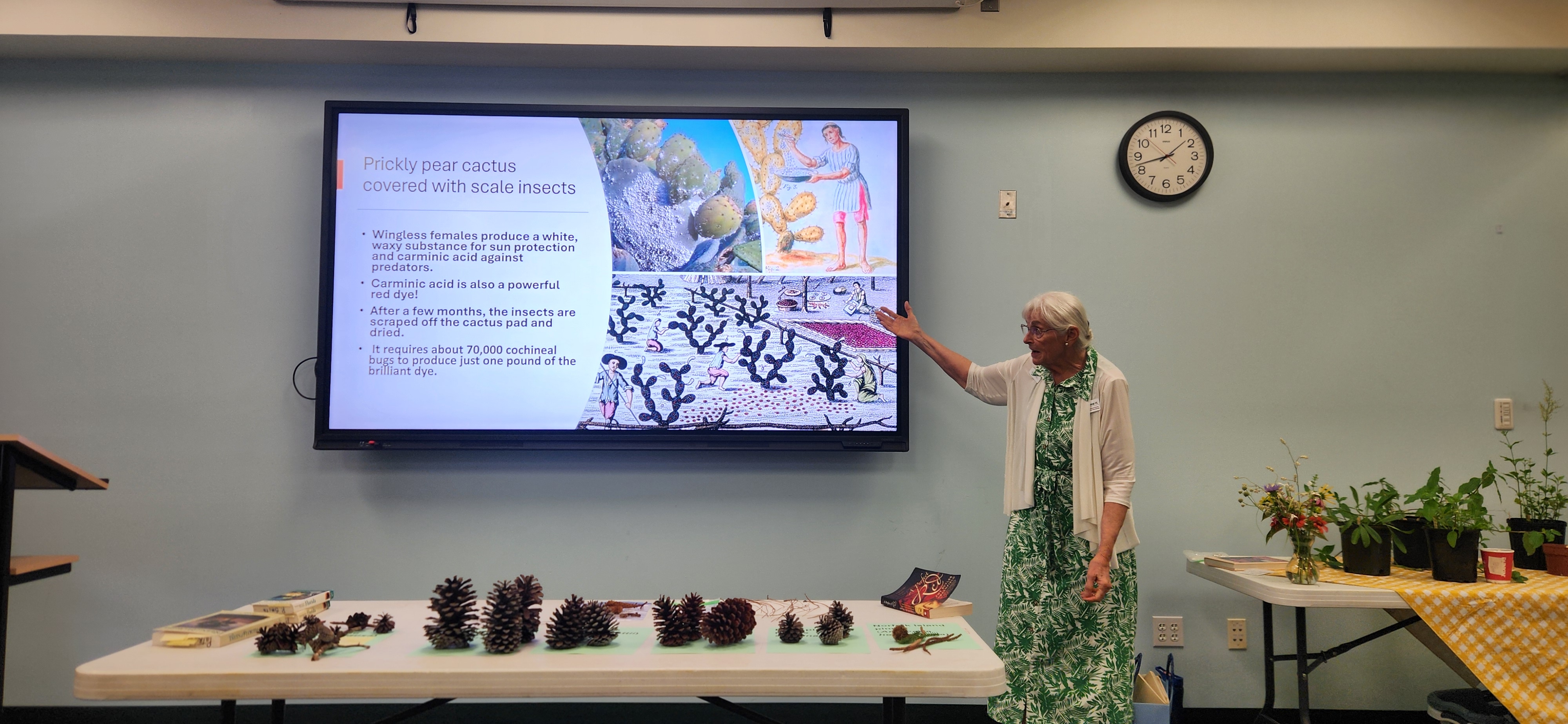
Second only to Silver
Spain exported its secret Nocheztli throughout Europe, making it Spain’s second most valuable export (second to silver). Accordingly, it was used for royalty and the wealthiest at first. The British Army dyed their uniforms with Nocheztli due to its permanent color; hence, the Redcoats.
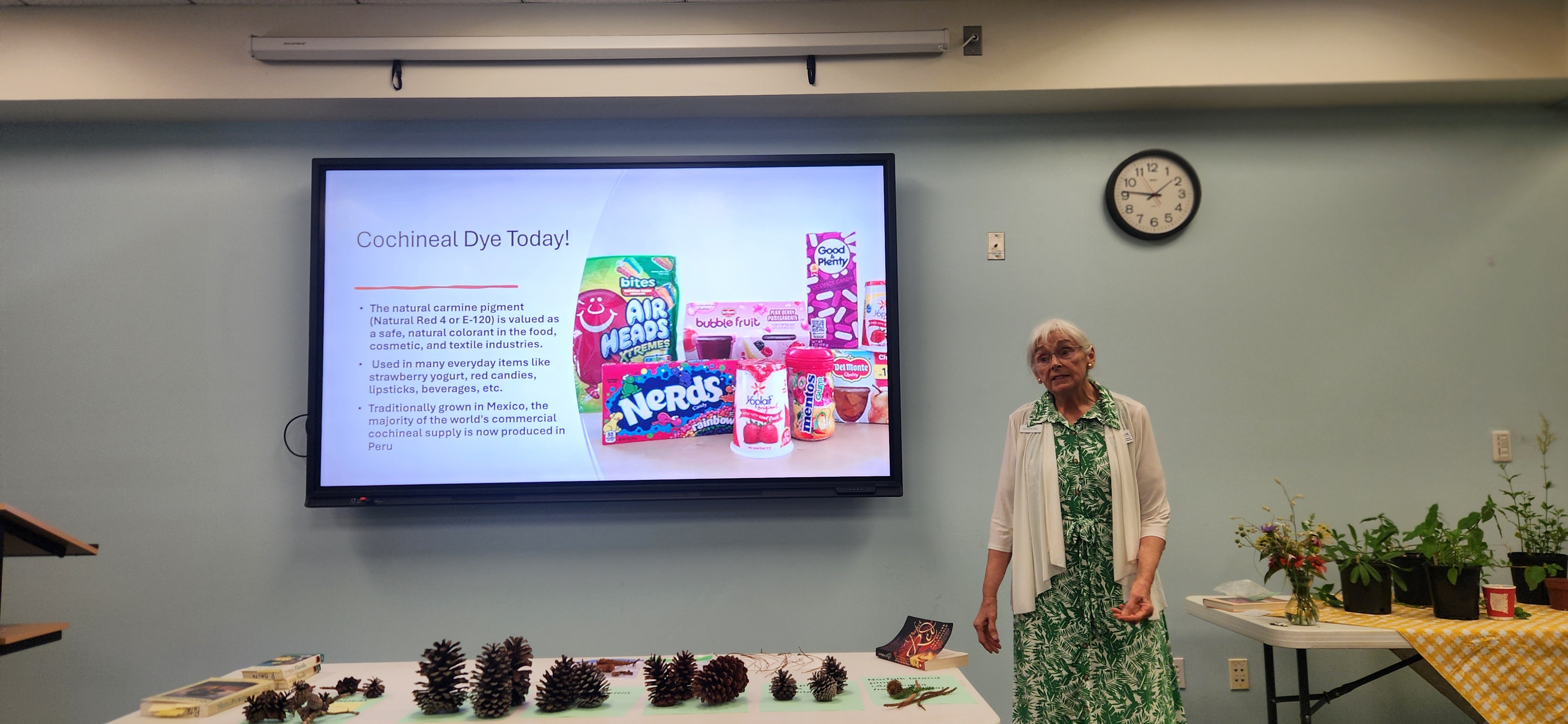
Future of Cochineal
The natural carmine pigment (Natural Red 4 or E-120) is valued as a safe, natural colorant in the food, cosmetic, and textile industries. Used in many everyday items like strawberry yogurt, red candies, lipsticks, beverages, etc. Traditionally grown in Mexico, the majority of the world’s commercial cochineal supply is now produced in Peru.
Visit the Discovery Gardens to view live plants of the Prickly Pear Cactus in the Southwest Garden. Additionally, stop by the MGV Plant Clinic for more information about mealy bugs and other plant pests. Located at the Lake County Agriculture Center, 1951 Woodlea Road, Tavares, FL 32778. Hours are Monday-Friday, 9 am to 4 pm.
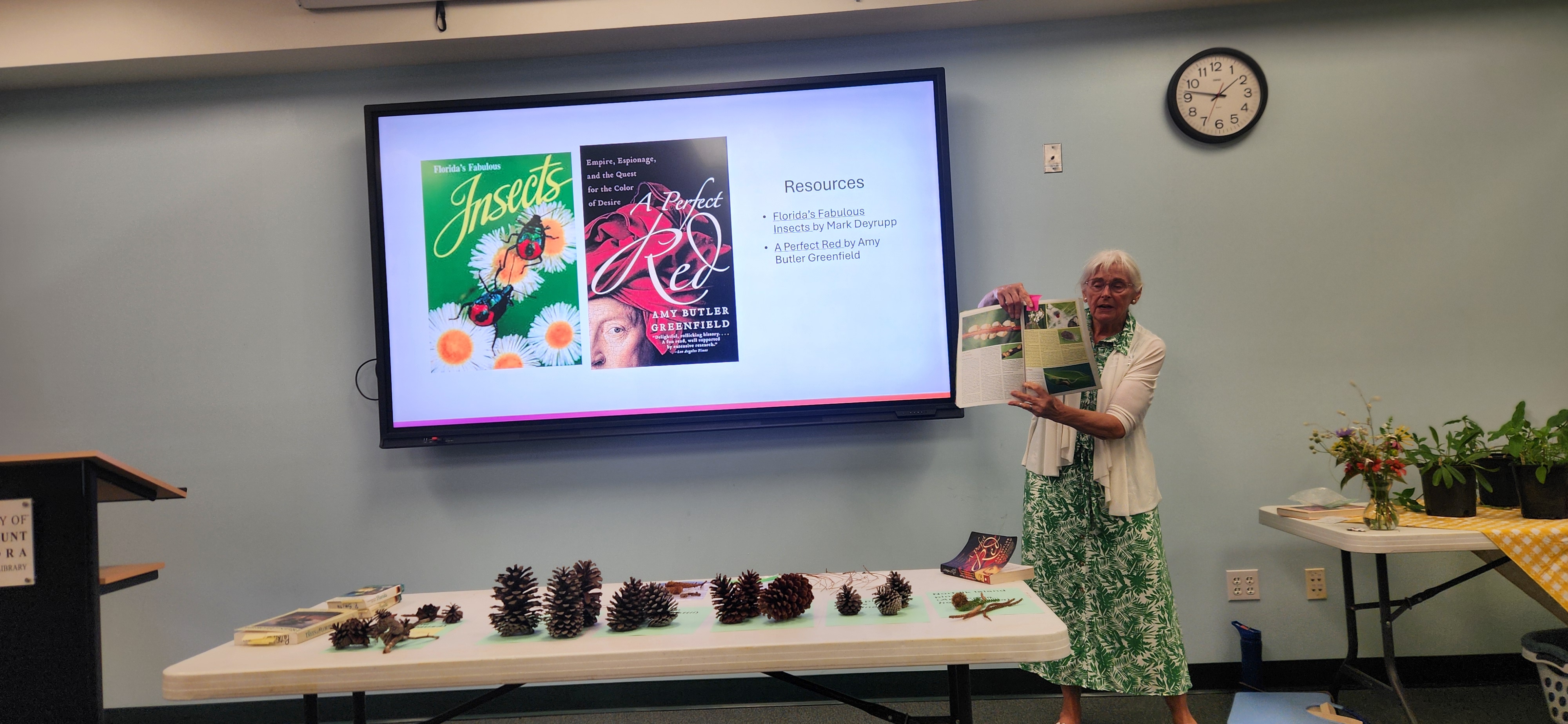
This post was written with the help of Suzanne Hill, Lake Beautyberry Chapter of the Florida Native Plant Society. Thank you!
Sunday, July 19, 2026
PRESENTATION: Five Central Florida Pines
by Biologist Patti Smith
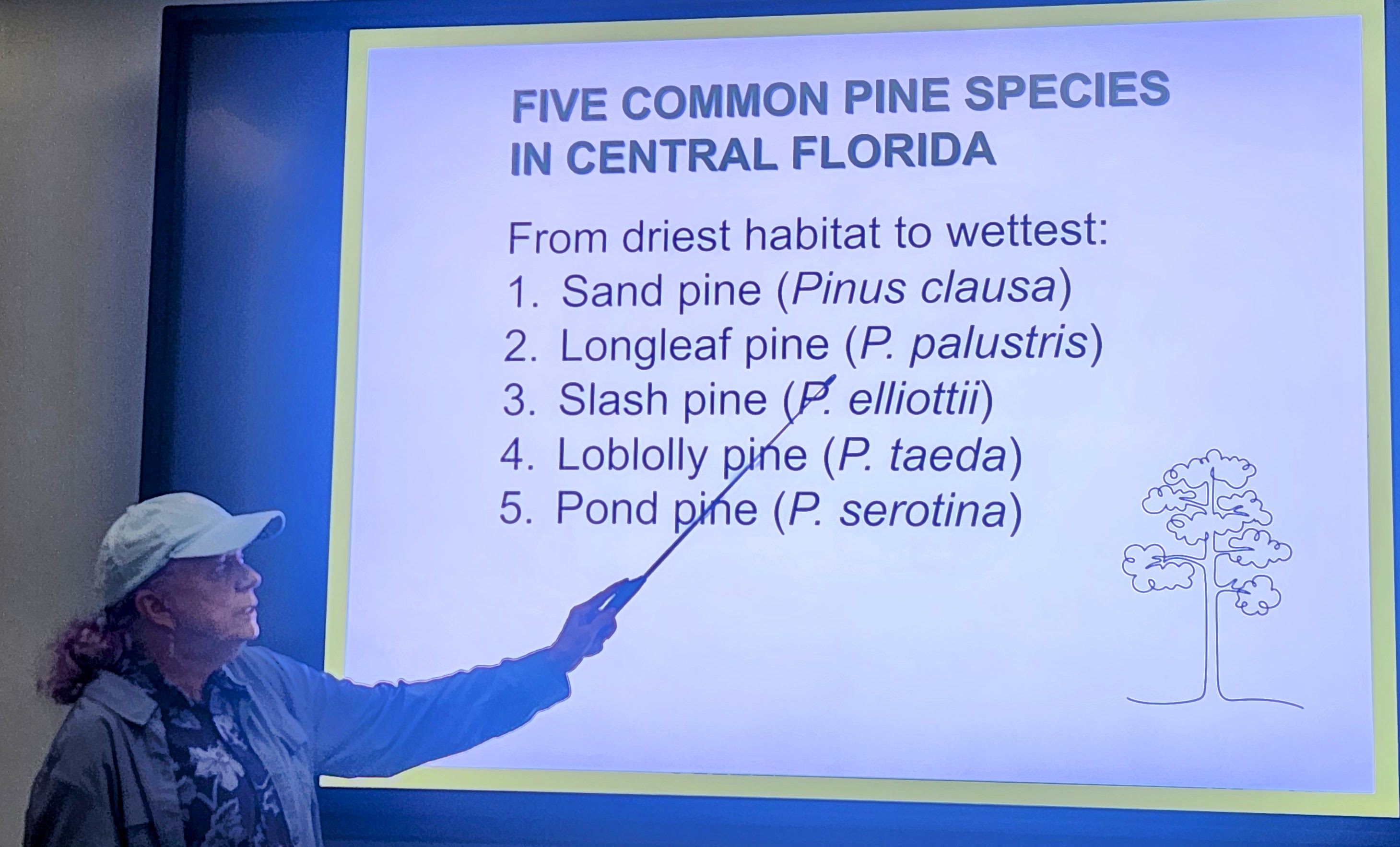
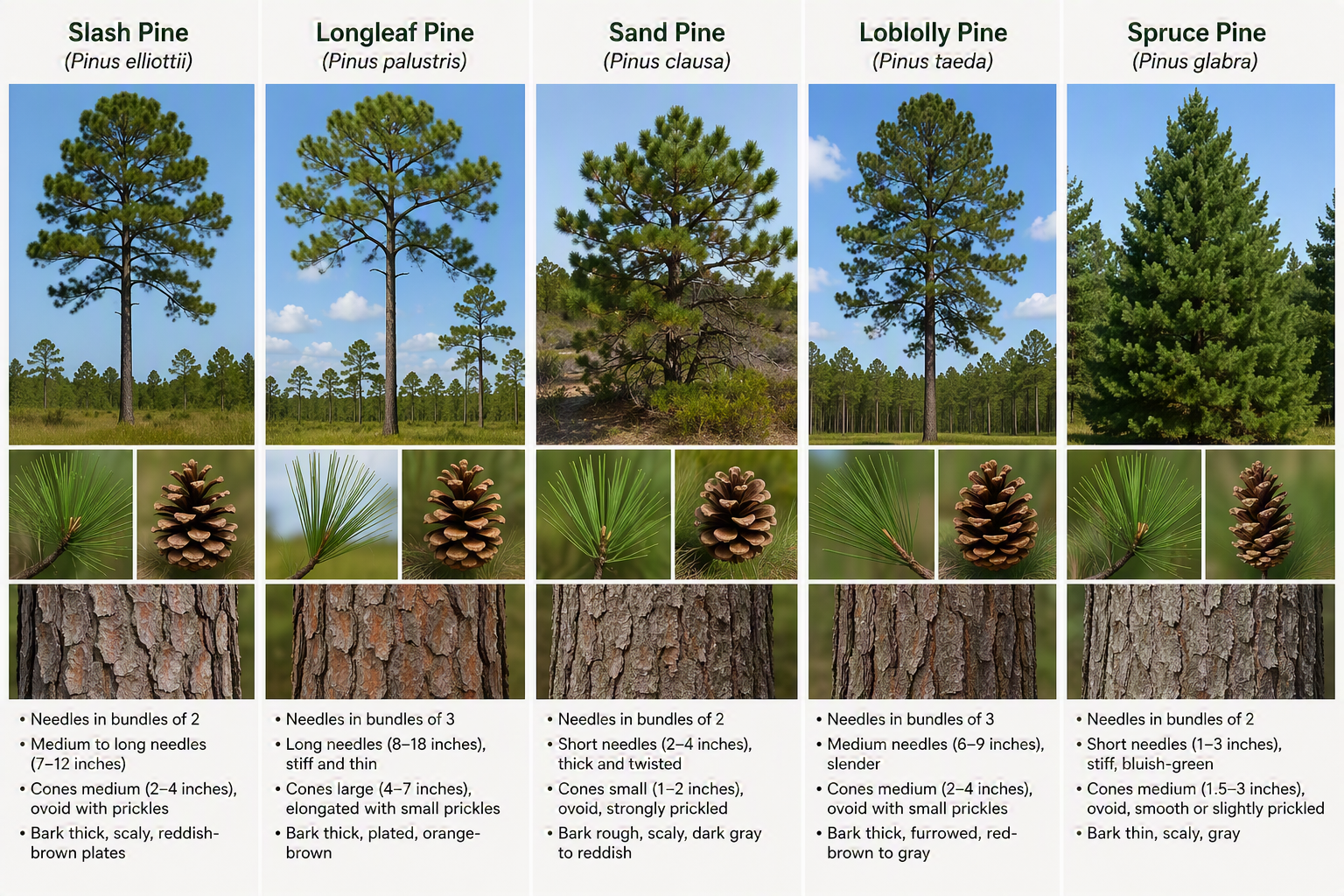
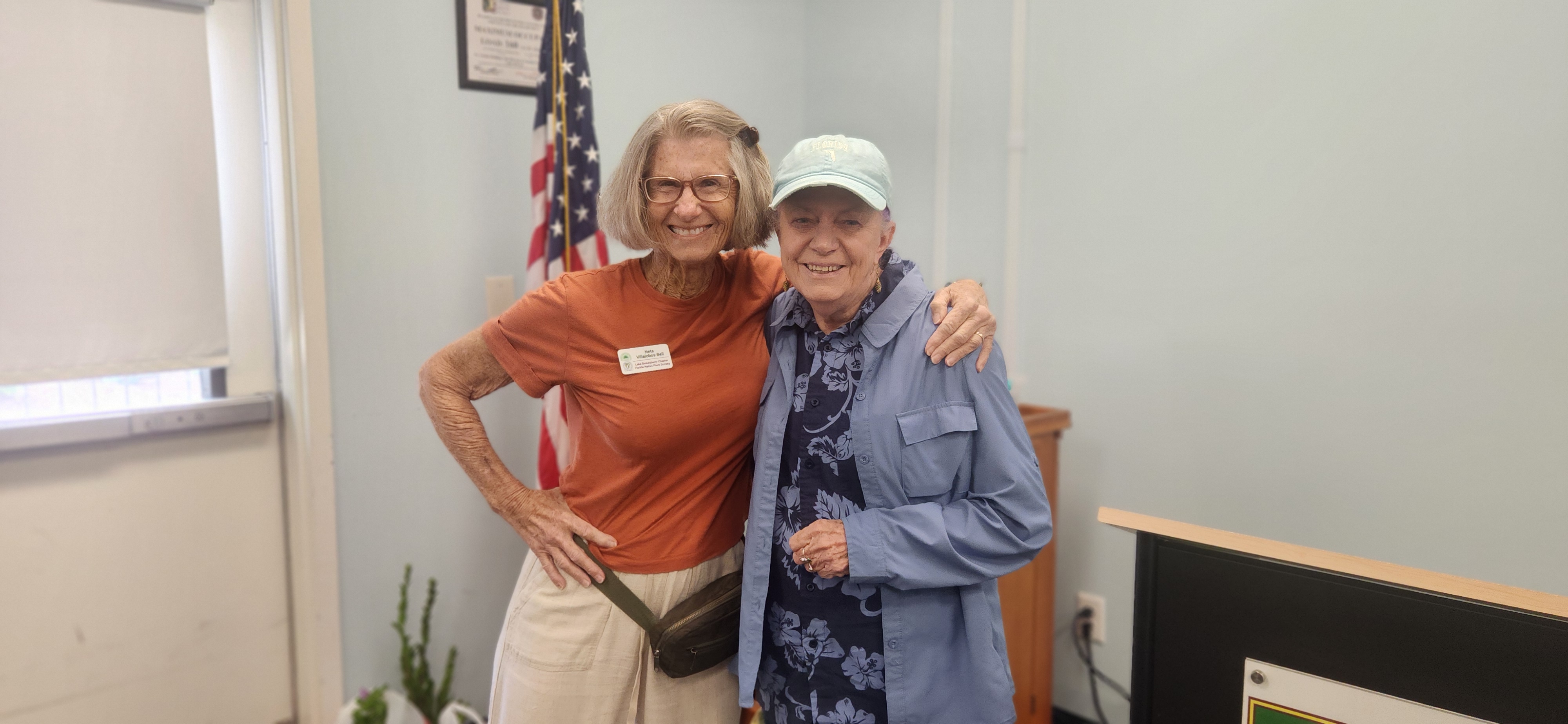 Can you name 5 pine trees NATIVE to Central Florida? One of our popular speakers, Biologist Patti Smith (envirosmith100@gmail.com), spoke about native pine trees, with details from history to identification, Turpentine indigenous uses, Red-Cockaded Woodpeckers, and Residential Plantings.
Tuesday, July 14, 2026
PRESENTATION: Build a Better Birdfeeder
by Neta Villalobos-Bell
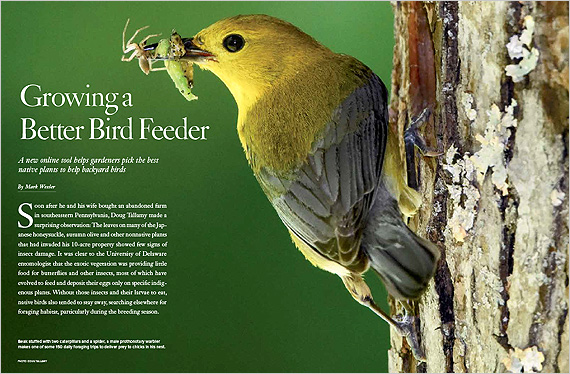
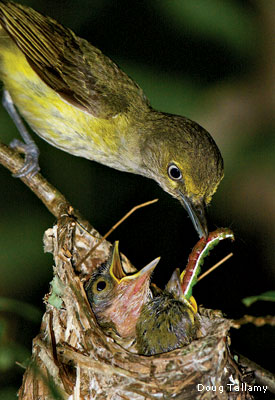
“Ninety-six percent of all terrestrial birds rear their offspring on insects, primarily caterpillars,” explains. To build “a better bird feeder” on his property, he began to investigate which trees and other plants host the greatest abundance and variety of insects so he could put in those plants after removing nonnative species.
Join us at the Umatilla Public Library on July 14, 2026 @ 2pm as Neta Villalobos-Bell presents. Lake Beautyberry Chapter of the Florida Native Plant Society
July 14, 2026, Tuesday, 2 pm
Umatilla Public Library, 412 Hatfield Dr, Umatilla, FL 32784
Sunday, May 17, 2026
CHAPTER MEETING
Lake Beautyberry Chapter of the Florida Native Plant Society Bi-monthly Meeting was Sunday, May 17, 2026, at 1:30 pm.
Free and open to the public.
Topic: LEARN AND GROW BY SHARING
Meet Six of our Members who shared their commitment and enthusiasm for Florida native plants, not only in their yards, but by extension into the community. With audience participation, we all learn and grow by sharing.
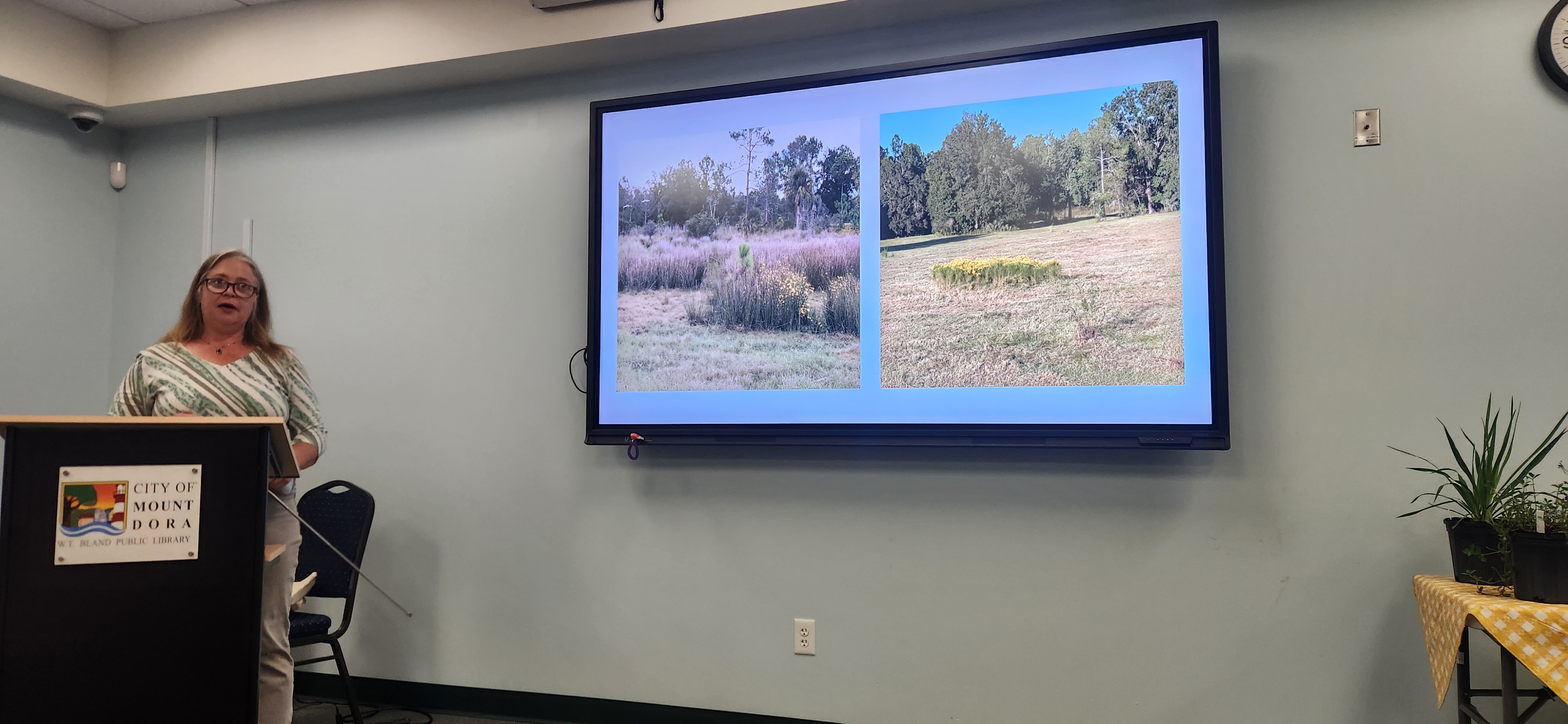
01 Lea Faulker. Working with a state Biologist, Lea has incorporated native plants into her once-completely-mowed pasture. Are they thriving, and is it worth the extra effort?
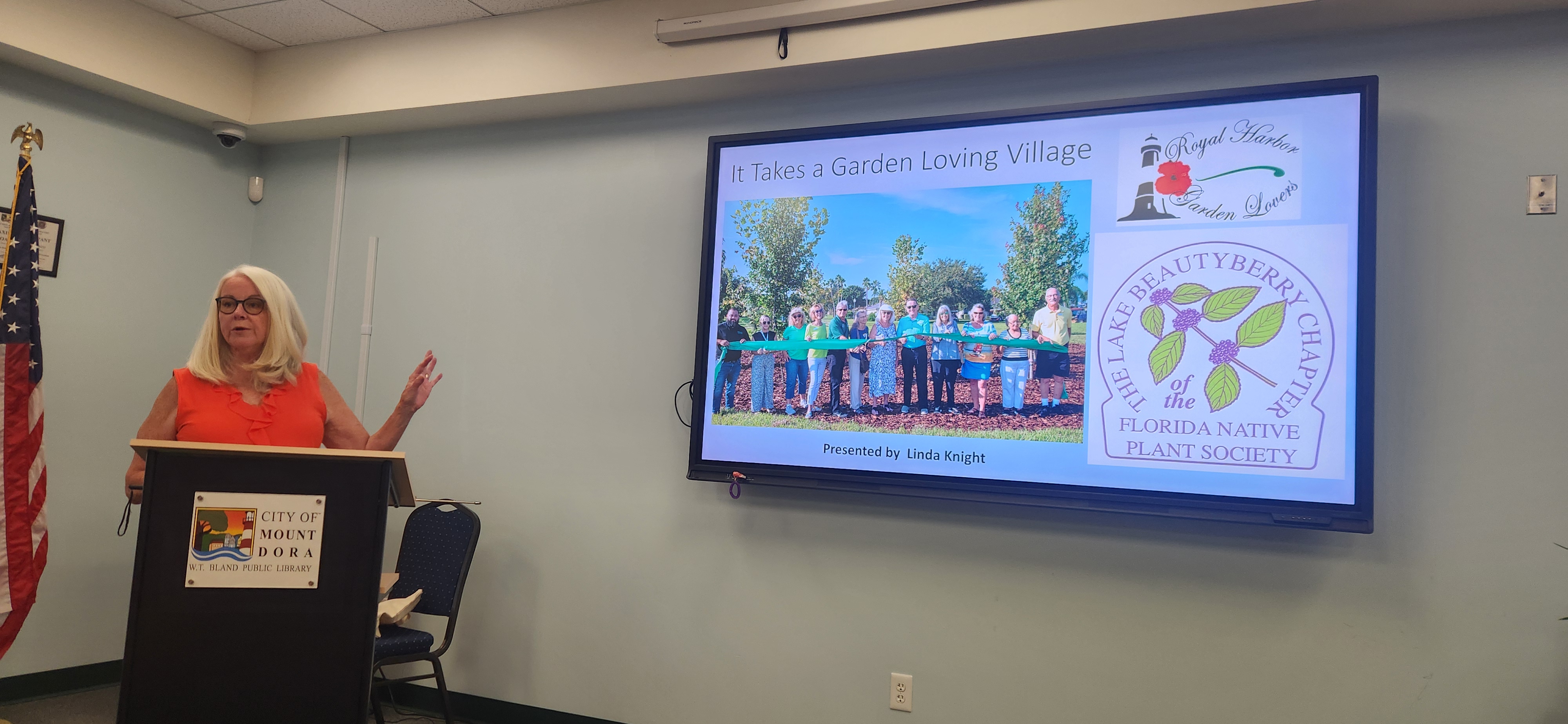
02 Linda Knight. Working within HOA and City rules is challenging, but Linda persevered and successfully planted a native treed bird habitat and wildflower garden. Along the way, she recruited resident volunteers who were impressed with her vision and accomplishments.
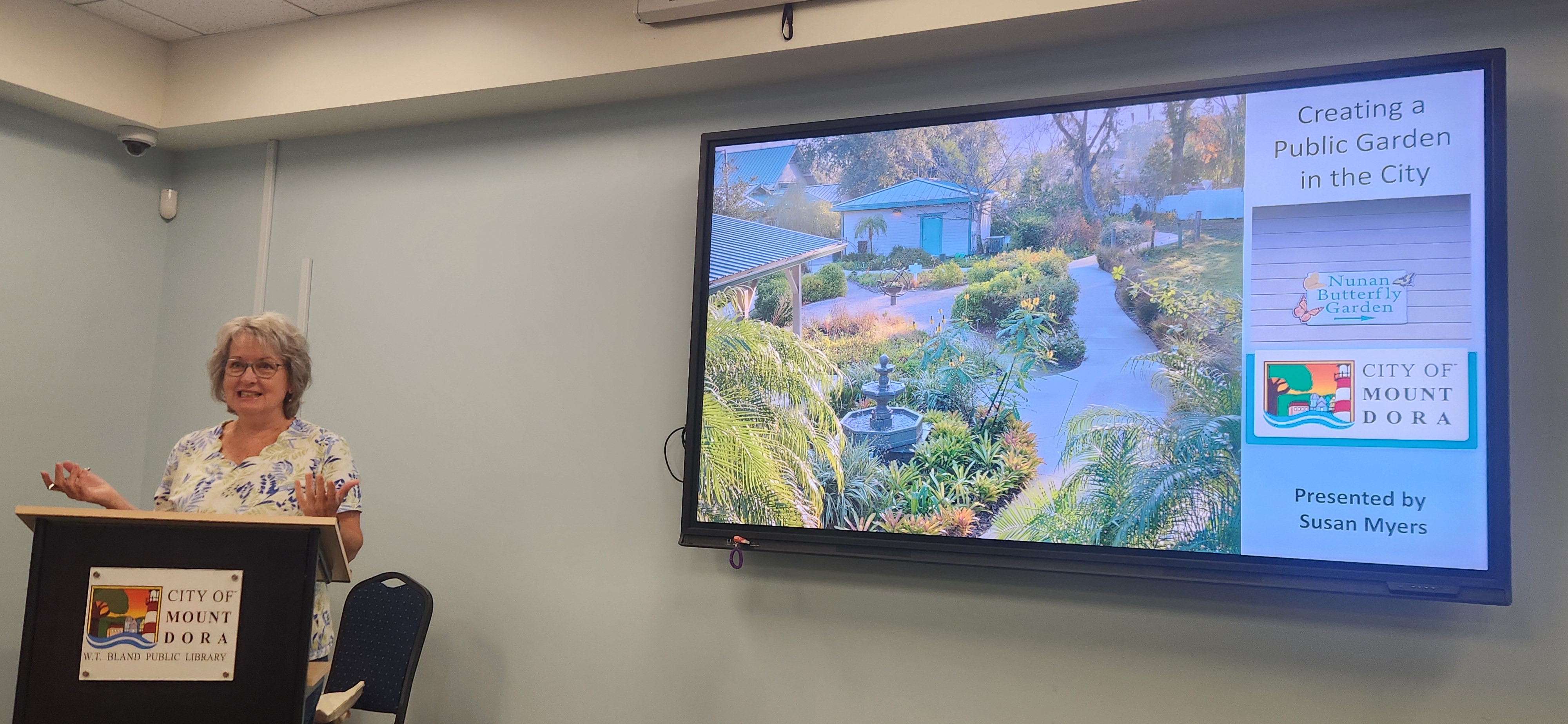
03 Susan Meyers. Although the Nunan Butterfly Garden next to W.T. Bland Library in Mt Dora is not all native, the lead gardener, Susan, and volunteers are adding more. The garden recently received praise from Dr. Marc Minno, butterfly expert, who said it was “the best public butterfly garden” he has ever seen. What native additions are planned?
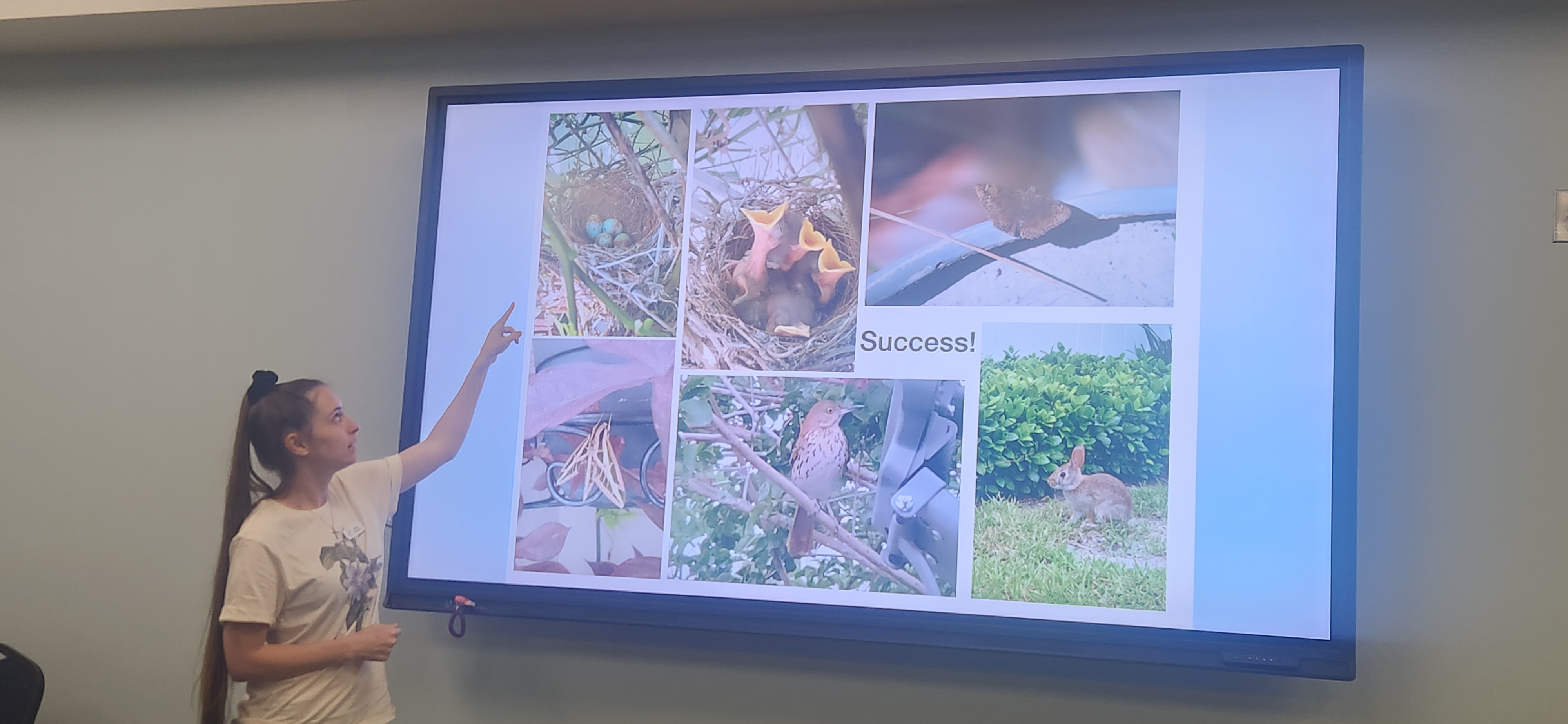
04 Jaime Vaughn. For many years, gardening with her mother, Jaime learned all about plants, but didn’t know the natives. After just one introduction about the importance of natives, she is passionate and unstoppable in her quest for more knowledge. What is her favorite native plant?
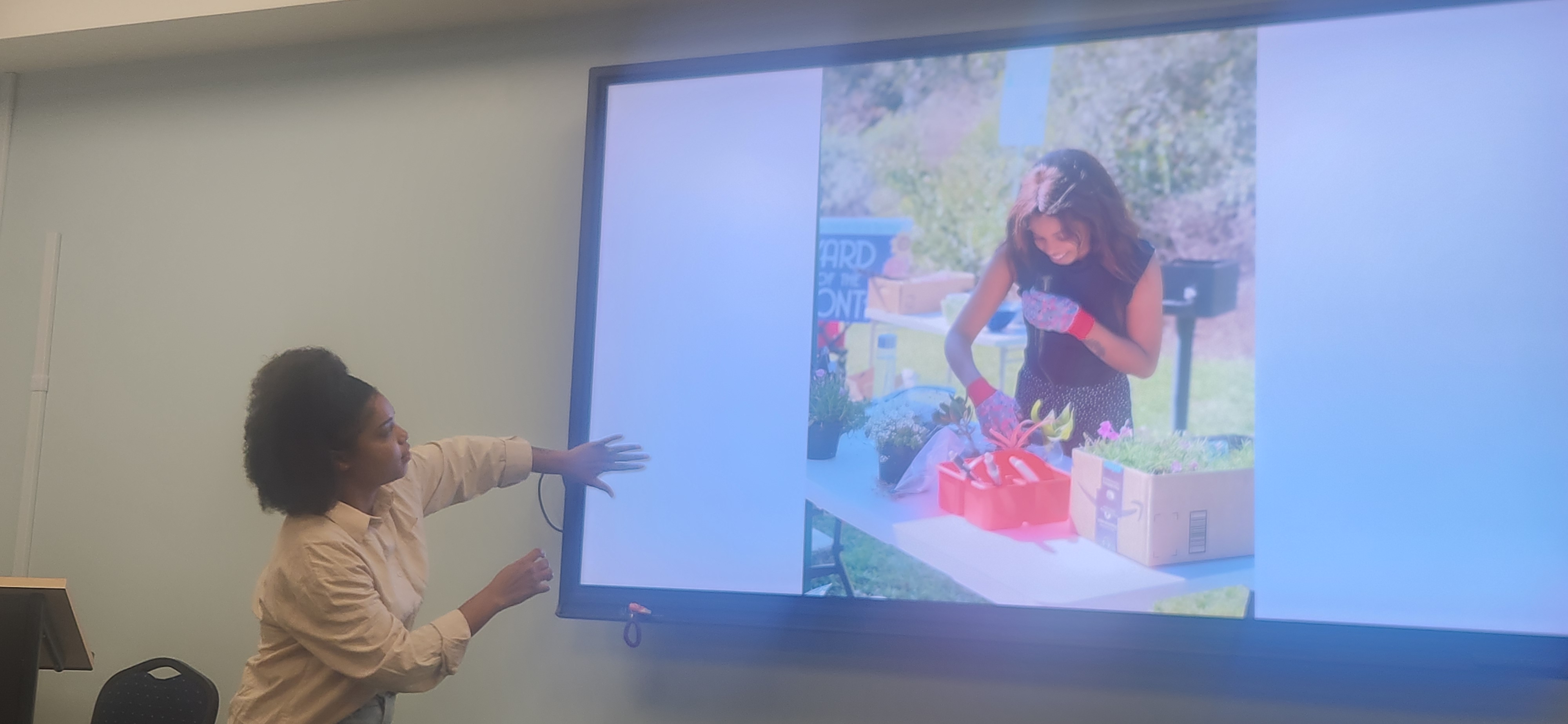
05 Caryn Desinor. As Executive Director of Fountain Outreach, Caryn has more than 15 years of nonprofit experience and has led community service programs and initiatives throughout Florida. Primarily planting for good health and nutrition, she has expanded her interest in natives with boundless enthusiasm. Will her next project be a pollinator garden?
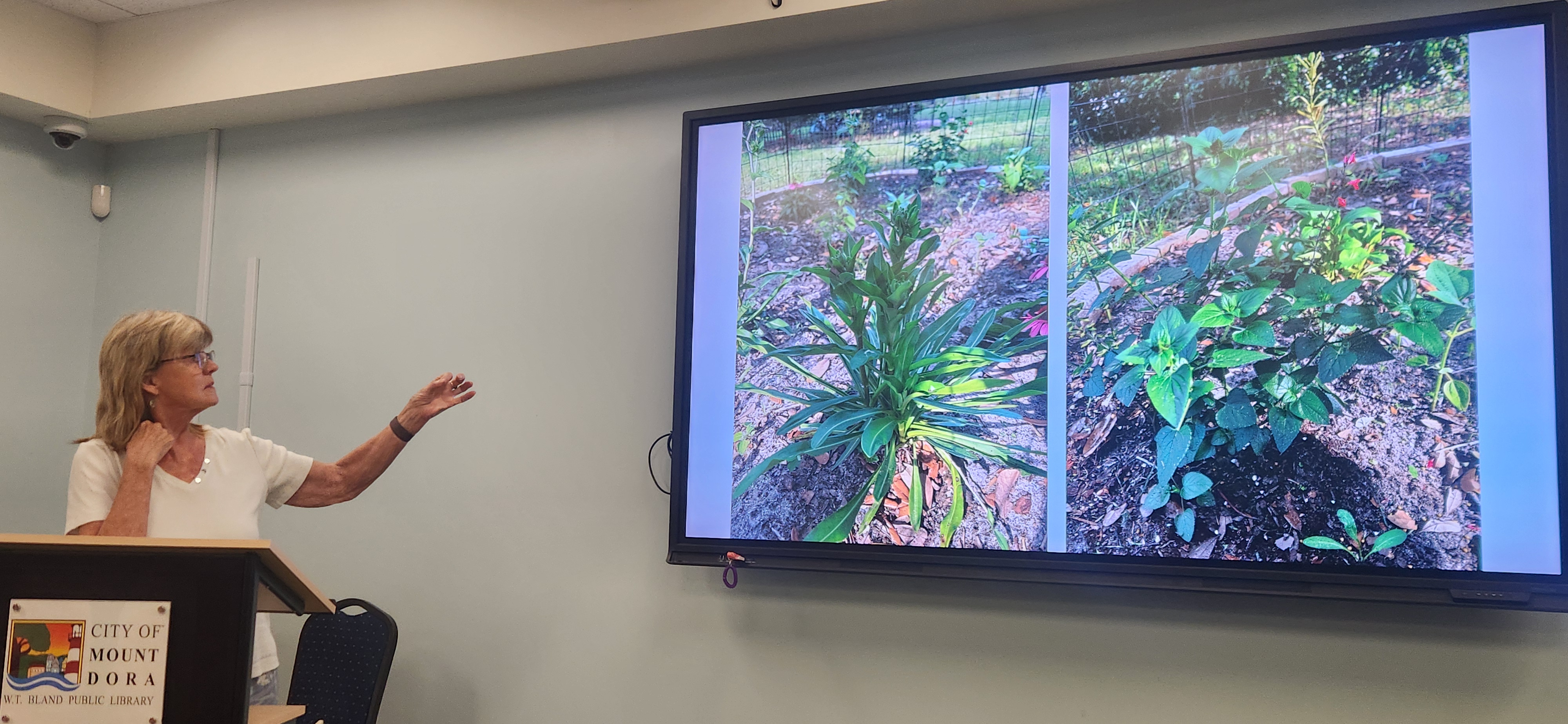
06 Jaime Allen. As a previous snowbird, Jaime experienced what worked and didn’t. Now, as a permanent resident, does she plant the same or differently?
DONATIONS NEEDED
Books ~ Native Plants ~ Seeds ~ Surprise Donations!

Any of the following items would be greatly appreciated for donation to the Chapter for the “Free for Donation” tables. It makes the meetings fun!
Healthy native plants in a labeled pot.
Native plant seeds in a labeled bag.
Florida-specific books, such as plant identification, soil composition, composting, irrigation, propagation, gardening, wildlife, natural areas, hiking areas, and more.

Saturday, April 11, 2026
The Native Plant Sale - Spring 2026


(Photo credits: Peg Urban)

APRIL is National NATIVE PLANT Month! Buy Florida Native Plants, especially selected for your Central Florida home. Advisors on site for guidance & growing specs. Cash & Credit Cards accepted. Bring your wagon or tote bag. You'll love the offerings.
The Lake Beautyberry Chapter of the Florida Native Plant Society's mission is to champion Florida's native plants and their habitats and is proud to serve Lake County.
Our meeting location is at the W. T. Bland Library in Mount Dora. There is plenty of parking, access to the library services before and after meetings, outdoor features, such as the Butterfly Garden, Pavilion, and Forest Preserve hiking trails, and, of course, downtown amenities. We meet on the 3rd Sunday of alternating months starting in January.
CHAPTER MEETING
Lake Beautyberry Chapter of the Florida Native Plant Society Bi-monthly Meeting is Sunday, May 17, 2026, at 1:30 pm.
Free and open to the public.
Topic: Share Your Yard Experiences

This is our traditional Spring Program, featuring member presentations & audience participation. We learn & grow together by sharing.

Meeting will be held at the W.T. Bland Public Library, 1995 N Donnelly Street, Mount Dora, FL 32757
Native Plant Sale
Saturday, April 11, 2026, 10:00 am to 12 noon
 Many Native Plant species for sale:
- 1 gallon pot @ $6.00 each
- 3 gallon pot @ $12.00 each
We will have experienced Native Plant Enthusiasts to assist in your purchases. We will accept payments in Cash and Credit Cards. Come early because we tend to sell out early!
Plant Sale Location: Parking Lot, to the Rear of the W.T. Bland Public Library, 1995 N Donnelly Street, Mount Dora, FL 32757
